 Go up
Go up


Exploring SimplyMap Data: Biking to Work in the US
Posted on Jul 09, 2015 by Admin
In this week’s SimplyMap report, we set out to find which cities have the highest percentages of people who use their bike as their mode of transportation to work in the US. Let’s get started!
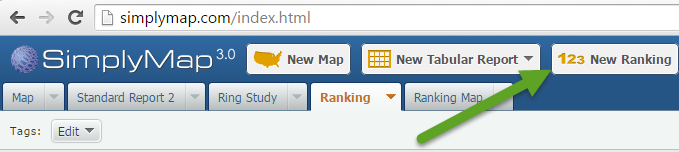
1. Create a new Ranking Report by selecting “New Ranking” at the top of Simply Map:
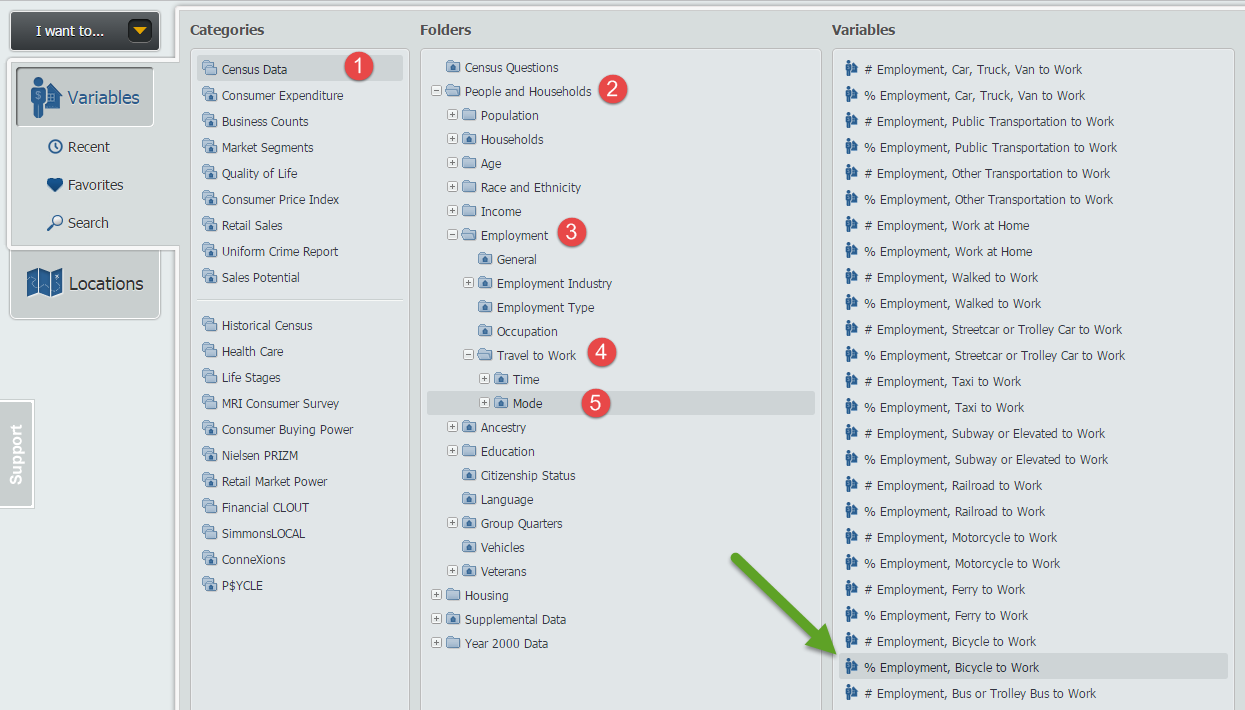
2. Select the variable to rank. Follow this path to find the % Employment, Bicycle to Work, 2014 variable: Census Data » People and Households » Employment » Travel to Work » Mode. Image below for reference.
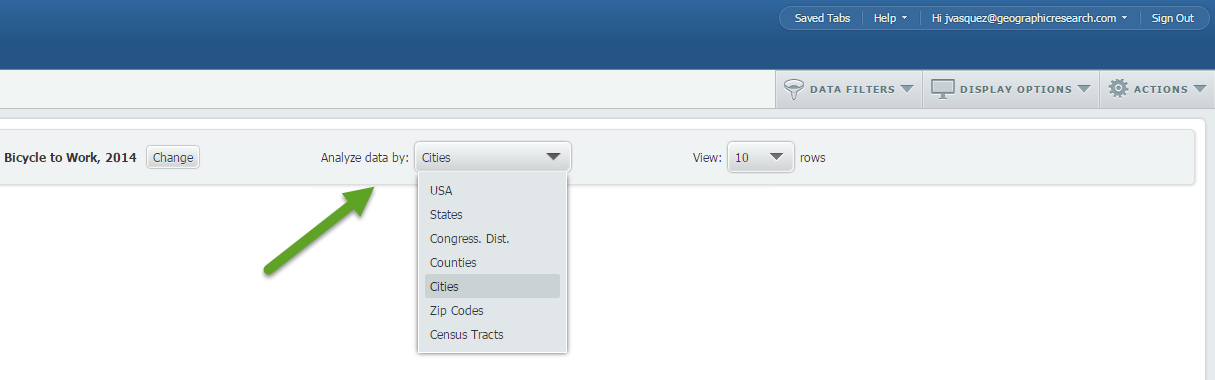
3. Open the Locations panel and choose USA as your geography. Close out the Locations panel to generate your report. Use the “Analyze data by” tool to select cities.
Because our variable is using a percentage, the ranking report may produce results skewed towards cities with a smaller population. To address this, we can quickly apply a data filter to only show cities with a population greater than 50,000.
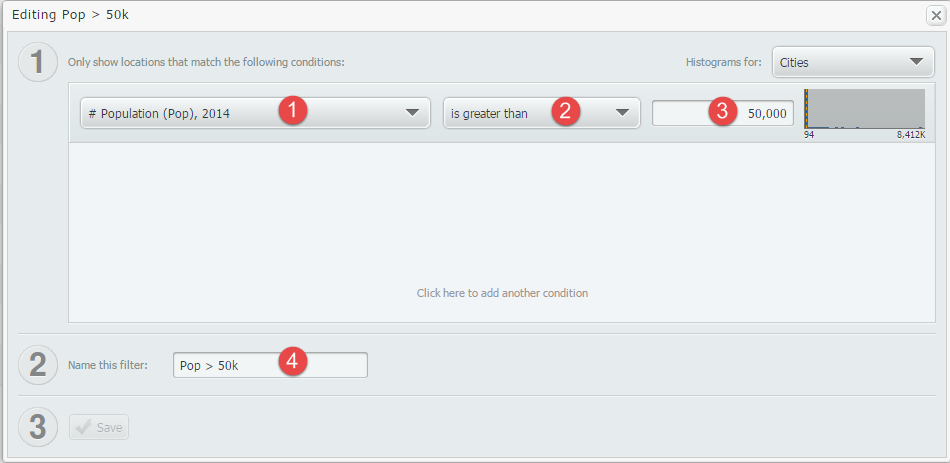
Favorite the variable titled, # Population (Pop). This can be found here: Census Data » People and Households » Age » Total. Return to your report, and select Create New Filter from the Data Filters Dropdown towards the top right. Follow the steps below to create and apply the filter:
- Scroll down on the variables dropdown to the Favorites list. Select # Population (Pop)
- Set the second dropdown to be “is greater than”.
- Enter 50,000 into the value field.
- Name the filter
- Save
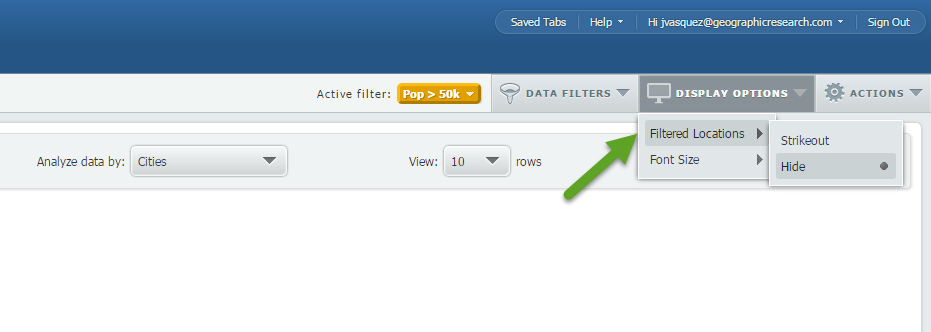
Once applied, your new report will be generated to show only cities that have a population greater than 50,000. Cities that don’t meet this criteria will be displayed with a strikethrough. To hide this, click on Display Options > Filtered Locations > Hide to see your final list.
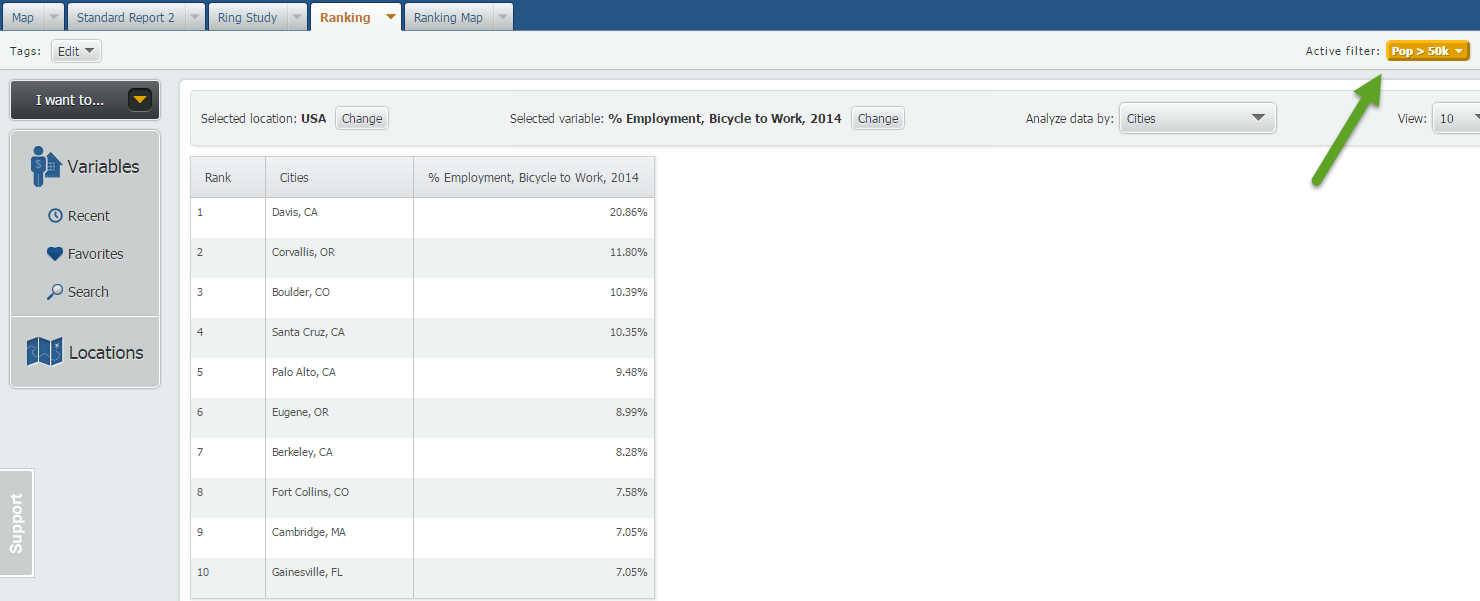
Davis, CA takes home the distinction of having the most bike to work commuters in the United States. A little research on Wikipedia reveals that Davis, CA’s motto is: Most Bicycle Friendly Town in the World. Our results here seem to prove that motto (at least in the US)!
Stay tuned for more SimplyMap reports and tips!
More from SimplyAnalytics


Posted on Oct 29, 2015 by Admin
Did you know that SimplyMap allows you to search for businesses by NAICS or SIC codes? Searching by these codes is a great alternative to the general keyword search. Using the keyword sea...
Posted on Nov 23, 2012 by Admin
Men's Health magazine is charting vanity in US cities, with help from SimplyMap. What did they find? The Sunshine State, with a long history of going to great lengths to look good, tops t...
Posted on Oct 26, 2016 by Admin
In this week’s SimplyMap report, we’ll take a look at the tags feature and demonstrate how it can be useful for you as you work in SimplyMap. SimplyMap users can have up to 20 tabs open i...
Posted on Dec 03, 2015 by Admin
With the Thanksgiving holiday last week, we decided to take a quick look into SimplyMap to see what pertinent variables are available for analysis. First, open the Variables panel and cli...
Posted on Sep 05, 2019 by Admin
We are pleased to be exhibiting again at the Charleston Library Conference, on Tuesday November 5th, 2019. The Vendor Showcase will be held in the Gaillard Center Grand Ballroom (95 Calho...
Posted on Nov 24, 2014 by Admin
In this week’s report, we research America’s most educated cities. SimplyMap contains a total of 111 educational attainment variables, including general population and by race. We used th...
Posted on Feb 01, 2009 by Admin
Want to know the top 10 wealthiest ZIP codes in your state? How about the top 25 counties with the most elderly residents? Duke University students can now easily answer these questions a...
Posted on Jun 02, 2016 by Admin
Three weeks ago we utilized the SimmonsLOCAL data set to visualize contiguous America’s mayonnaise brand preference. Staying with the American visualization theme, this week’s report will...
Posted on Nov 06, 2013 by Admin
SimplyMap includes a number of helpful support tools; guided wizards available when and where you need them, detailed help files, and an online support center with FAQs and searchable kno...
Posted on Mar 21, 2011 by Admin
Men's Health magazine decided to crown one town America's Most Socially Networked City, and has generated quite a buzz in the process. Their survey examined the number of Facebook and Li...