 Go up
Go up


SimplyMap Tip - Editing the Map Legend
Posted on Dec 02, 2014 by Admin
Today we take a look at one of the more advanced features in SimplyMap - editing the map legend. Editing the map legend is a great way to not only customize how the data is distributed on the map, but to also change the look and feel of the map.
First, you can customize the map by changing the geographic unit shown and the variable year from the legend.
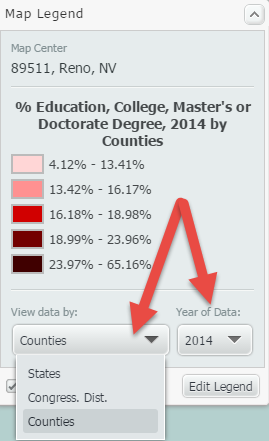
Data can be displayed by State, Congressional District, County, City, ZIP Code, Census Tract, or Census Block Group. The geographic unit can be chosen manually, or you can check the box labeled “Auto-select Geo Unit,” and SimplyMap will automatically display the most appropriate geography based on the zoom level of the map. Zooming into an area will result in increasingly smaller geographic units and present the data in greater detail.
To edit other aspects of the map legend, select “Edit Legend” at the bottom of the legend. The Legend Editor will open. The image below details this dialog, along with an explanation of what can be edited:
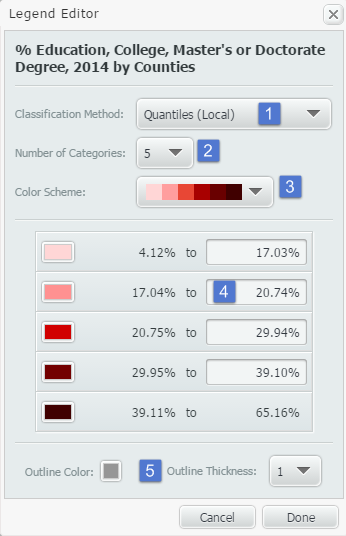
1. Classification Method: This dropdown determines how the data in your map is grouped. There are multiple methods for calculating break values for the data. You can select any of the following from the Classification Method menu:
•Quantiles (Local)
•Quantiles (National)
•Natural Breaks (Local)
•Natural Breaks (National)
•Equal Intervals
Changing from Quantiles (National) to Quantiles (Local) will reconfigure your data ranges to reflect a sample of locations from the current view, as opposed to viewing it on a national scale.
You can learn more about each of the classification methods in the FAQ.
2. Number of Categories: Determines the number of data ranges you would like to see. This will also impact the number of colors you see on the map. By default, this will show 5.
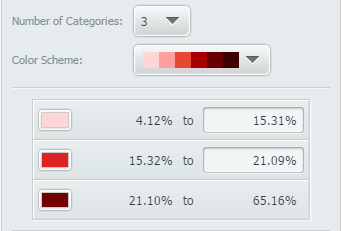
3. Color Scheme: Changes the map’s color scheme. Alternatively, if you select an individual box in the legend, you can apply your color of choice for each.
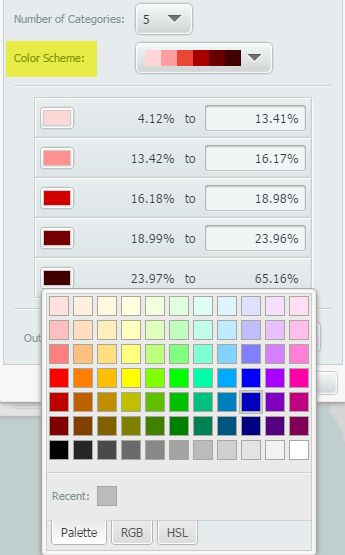
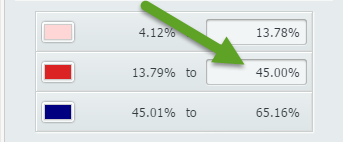
4. Data Values: Allows the user to manually enter new category break values and create custom data ranges.
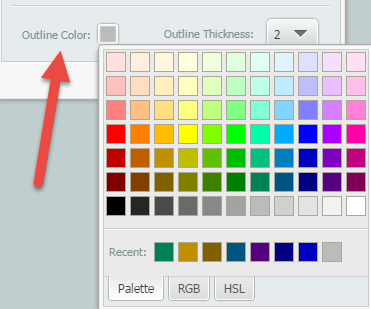
5. Outline Color/Outline Thickness: Changes the color and thickness of your map’s outline. The image below shows a map’s color outline and thickness set to a darker grey, and 2 respectively.
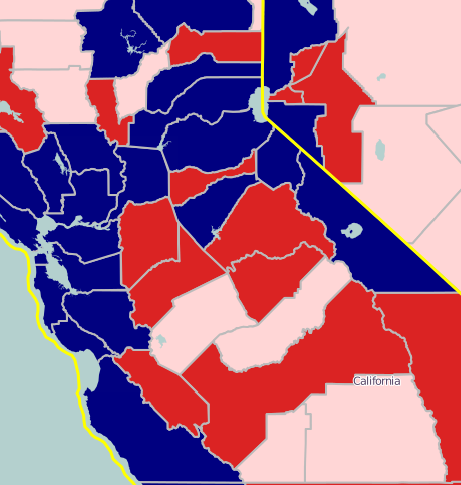
This is what the final map would look like with the edited color outline and thickness:
Stay tuned for more SimplyMap tips and tricks!
More from SimplyAnalytics


Posted on Jun 08, 2015 by Admin
In this week’s report we take a look at one folder found within SimplyMap’s SimmonsLOCAL data package. SimmonsLOCAL is a powerful targeting and profiling system that provides insights int...
Posted on Jul 20, 2020 by Admin
Hello readers! We hope you are doing well and staying safe. Today we are excited to introduce the Simmons NCS crosstabs functionality! This is a feature we’ve been working on for a while,...
Posted on Apr 14, 2016 by Admin
This week’s SimplyMap report will provide an overview of one of the more advanced functionalities in SimplyMap - applying multiple filter conditions. Filters can be applied to any map or ...
Posted on Dec 11, 2015 by Admin
With the final week of the college football season in the books, and bowl game selections having just taken place, we wanted to search within SimplyMap to see if any data pertaining to co...
Posted on Jan 15, 2013 by Admin
The GRI team is looking forward to exhibiting at ACRL 2013 at the Indiana Convention Center in Indianapolis April 10 - 12, 2013. Every other year, ACRL offers its premier professional dev...
Posted on Nov 22, 2016 by Admin
We will be exhibiting at ALA Midwinter in Atlanta, Georgia in January. You can find the GRI team at Booth 1155, where we will be catching up with customers old and new, and sharing some e...
Posted on Sep 27, 2019 by Admin
Hello readers! This week we provide an in-depth response to a question asking about the legend classification methods in SimplyAnalytics. This response is now part of our Help Center: htt...
Posted on Jul 26, 2016 by Admin
In this week’s SimplyMap report, we’ll take a look at the Retail Market Power dataset and provide a simple, effective example of how the data package can be used. If your institution curr...
Posted on Mar 02, 2015 by Admin
In this week’s SimplyMap tip, we outline the process of creating a radius location. Radius locations are a great way to quickly gather information from an area surrounding a target addres...