 Go up
Go up


SimplyMap Tip: Creating a Custom Location
Posted on Dec 15, 2014 by Admin
Custom Locations allow SimplyMap users to combine several locations into one larger region. For example, you can use this feature to combine three adjacent ZIP Codes to create your study area.
In this example, we will take a look at neighborhoods (at the block group level) surrounding a university in Chicago.
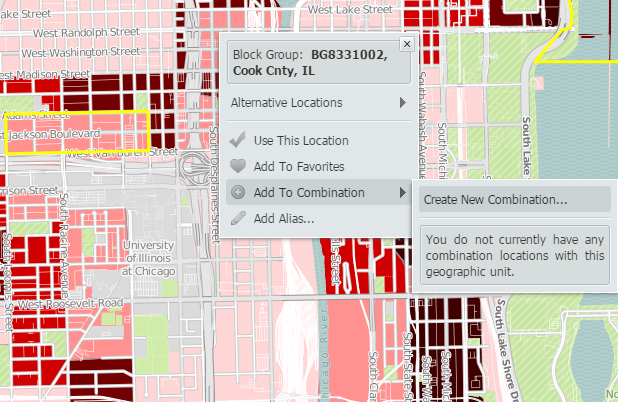
To get started creating your custom location from the map, use the i-tool and select a location. There will be a drop down to “Add to Combination” with an option to “Create New Combination”.
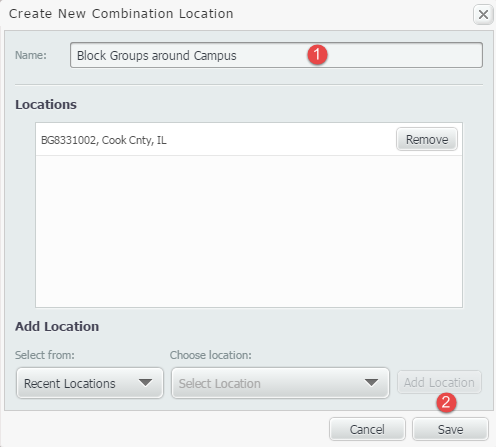
This will open up a box to create your combination. Enter a name, and Save.
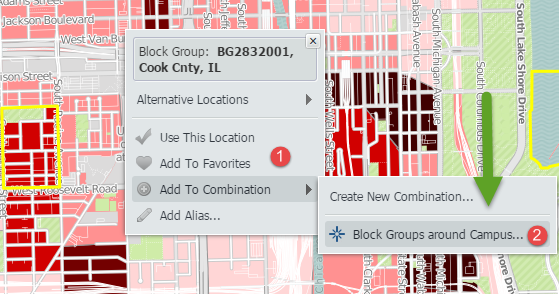
Once saved, your combination location will be available to have additional locations added to it. To add more locations, use the i-tool over a location once more, and select “Add to Combination” while choosing the combination that was just created.
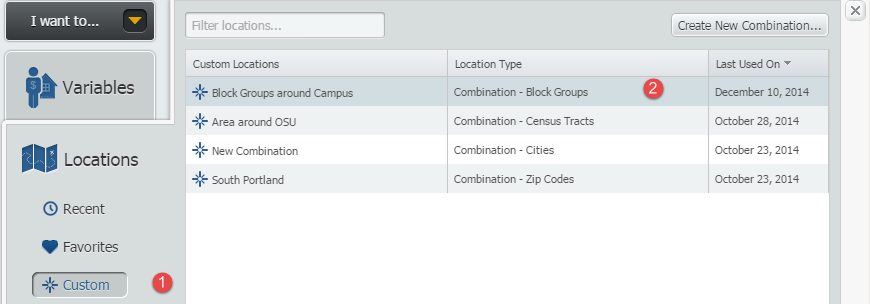
Repeat this process with all locations you would like to include. Selecting the locations panel, and going to “Custom” will allow you to access your new location.
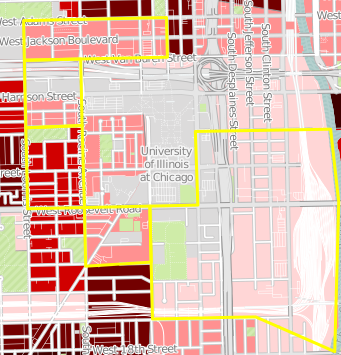
Below is a map representing the new custom location.
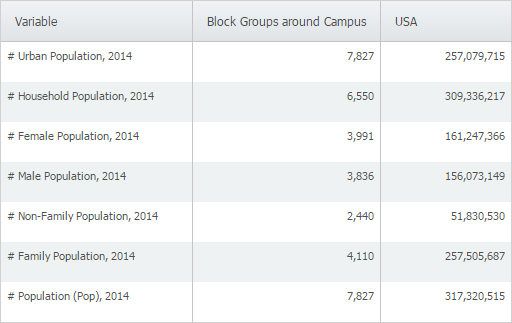
One of the additional features of creating a custom location, is that this location can be utilized throughout your reports. SimplyMap will combine the data from each individual location, and present the total for the combined custom location.
Method #2
The second method of creating a custom combination does not require the user to have the location in a recent or favorites, as described above.
1. Go to locations, and select your geography.
2. Check the box for Custom Location, as shown below:
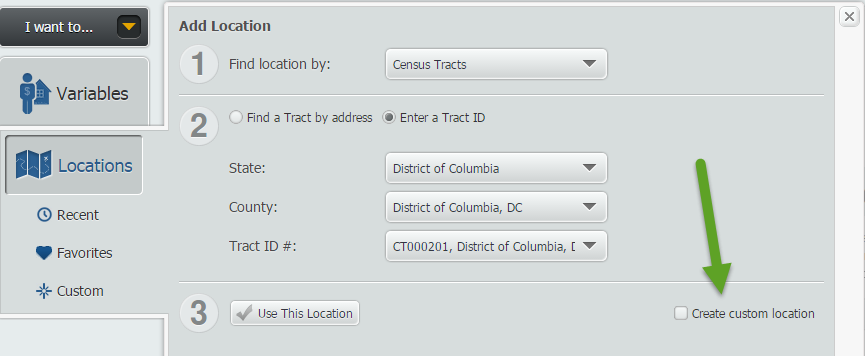
3. Select "Combination Location" (by default the Radius Location will be checked)
4. If you don't already have a custom area, select "Create Combination" and give the target area a name, as shown below:
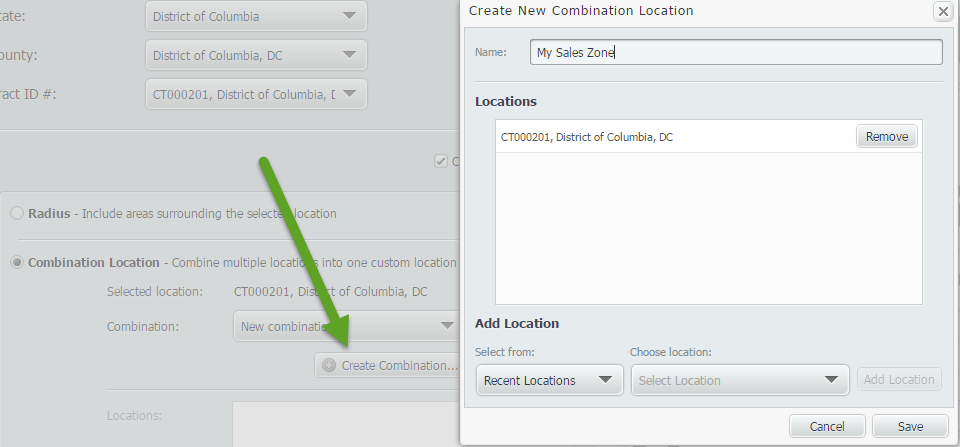
5. Save
6. Now you can select the drop down of locations and add them into your new custom combination that you created.
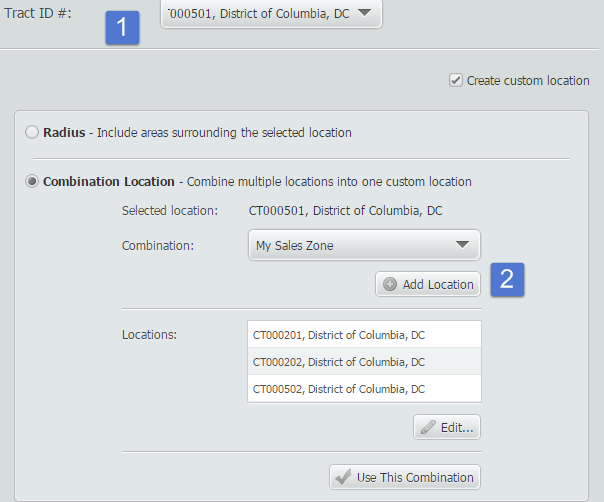
When you're ready to use your new location, select "Use This Combination"
Stay tuned for more SimplyMap tips and tricks! And don’t forget to follow us on Twitter @SimplyMap.
More from SimplyAnalytics


Posted on Dec 08, 2010 by Admin
The GRI team will be attending the American Library Association Midwinter meeting this year at the San Diego Convention Center. Visit us in booth 1055 in the exhibit hall from January 7 -...
Posted on Mar 04, 2020 by Admin
Come meet the SimplyAnalytics team at the 15th annual Electronic Resources and Libraries conference, held at the AT&T Hotel & Conference Center in Austin, TX. We will be exhibitin...
Posted on Feb 14, 2017 by Admin
In previous blog entries, we highlighted the value of having a mapping application to complement premium data when analyzing America's geographic preferences in credit cards, and mayonnai...
Posted on Apr 05, 2019 by Admin
Come visit the SimplyAnalytics booth (325) at the upcoming ACRL 2019 show in Cleveland! Say hello, grab a chocolate, and stay for a quick demo of SimplyAnalytics. The team will be showcas...
Posted on Jan 12, 2020 by Admin
Happy New Year! SimplyAnalytics will be exhibiting at the ALA Midwinter meeting, held this year at the Pennsylvania Convention Center in Philadelphia on January 24th-27th. If you attend, ...
Posted on Jun 02, 2016 by Admin
Three weeks ago we utilized the SimmonsLOCAL data set to visualize contiguous America’s mayonnaise brand preference. Staying with the American visualization theme, this week’s report will...
Posted on Apr 27, 2015 by Admin
In this week’s write up we want to share some quick tips and tricks that you might not yet know about in SimplyMap. TIP #1 Did you know that you can share your work? SimplyMap allows you ...
Posted on Feb 01, 2009 by Admin
Want to know the top 10 wealthiest ZIP codes in your state? How about the top 25 counties with the most elderly residents? Duke University students can now easily answer these questions a...
Posted on May 18, 2015 by Admin
The SimplyMap team is looking forward to visiting with customers and others at the SLA Annual Conference, coming to Boston on June 14-16. Come visit us at Booth #916, we are happy to answ...
Posted on Dec 09, 2014 by Admin
In this week’s SimplyMap blog post, we set out to discover which large US cities spend the most money per year on their pets. To find this out we used the variable, “Pets, Household Avera...